
-
ICCA Handbook Supplement 137: Venezuela
Manuel A. Gomez and Gilberto A. Guerrero-Rocca
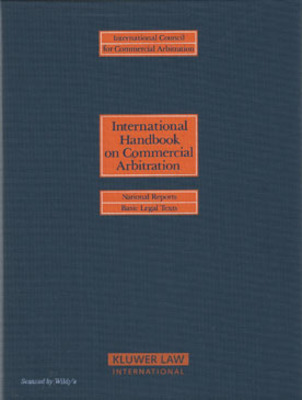
i. Introduction This National Report describes the legal framework of domestic and international arbitration in the Bolivarian Republic of Venezuela (“Venezuela”). It includes the most relevant and recent case law, and other important aspects that have shaped the development and use of commercial and investment treaty arbitration in recent times. This Report also discusses the regulation and use of mediation/conciliation given its distinction – alongside arbitration – as a non-judicial form of dispute resolution. The description offered here also considers the social, economic and political context insofar it is relevant to the discussion about arbitration in Venezuela. This Report is divided into nine chapters, including this introduction (Chapter I). Chapters II to VII cover different aspects of commercial arbitration, from the arbitral agreement to the means of recourse against the award. Chapter VIII discusses the current state of mediation/ conciliation in Venezuela, and Chapter IX addresses the main issues involving investment treaty arbitration. An unofficial English translation of the Commercial Arbitration Law of 1998 (Ley de Arbitraje Commercial, “CAL”) is included as Annex I to this National Report
-
A Primer on the Jurisdiction of the U.S. Courts of Appeals
Thomas E. Baker
This primer is a brief introduction to the complexity and nuance in the subject-matter jurisdiction of the U.S. courts of appeals. It examines procedural issues related to the exercise of appellate jurisdiction in appeals from final judgments and interlocutory appeals. Disciplines
-
Institutional Credit Markets Structure, Funding, and Regulation
Jose Gabilondo
Institutional Credit Markets provides a framework for understanding the institutional funding markets that undergird the U.S. credit system. It traces the evolution of the depository bank model, its non-bank competitors, and the financial conglomerates that span credit and capital markets.
-
Cryptocurrency Regulation: A Primer
Jerry W. Markham
This incisive and thought-provoking book examines the regulation of cryptocurrency trading by state and federal financial services regulators, in order to understand why these statutes proved to be ineffective in regulating this new asset class. Furthermore, it analyzes and evaluates pending proposals in Congress for more effective cryptocurrency regulation.
-
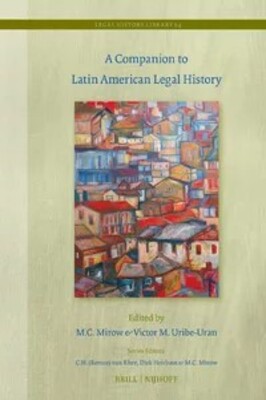
The Church
M C. Mirow
Apart from royal or national government, the Catholic Church has been the most cohesive and assertive institution of social, political, and legal action in Latin America. In the colonial period, an unusual collaboration formed between the church and royal government under the Royal Patronage of the church. Attempts to transfer this arrangement to the new nations in the independence period led to conflicts between the church and governments that created schisms between liberal and conservative thinkers and political parties reflecting different views of the the role of the church in society and government. In more recent times, often as the sole dissenting voice under repressive regimes, the church has turned to political action, social justice, and human rights.
-
The Greek Minority's Fate in the Former Ottoman Empire as a Human Rights Crisis
Hannibal Travis
The genocide in Pontos and in other parts of Anatolia, as well as Thrace, is not merely a part of history but a window into a contemporary human rights crisis. The destruction continues in a somewhat less violent form in our time as the culture, language, and religious rites of the Ottoman Greeks are lost due to massacres, forcible exile, and expropriations of sacred sites. This chapter introduces relevant human rights norms and argues that measures implemented by the international community after other genocides could be a model for restitution and guarantees of non-recurrence in Pontos and other parts of Turkey.
-
Filiation, Marriage, Family, and Domestic Conflicts
Victor M. Uribe-Uran
This chapter discusses the legal history of filiation, family, marriage, and domestic conflicts in Latin America during colonial times and after independence. It considers the prevalence of sexual liaisons before or out of marriage and the various legal categories of illegitimate offspring resulting from such relations. Then, it looks at marriage and family formation. Finally, it considers domestic conflicts and their legal evolution from private to public and then, to international legal affairs. The chapter examines forces behind such transformation highlighting that they included European colonial powers, the Catholic church, legal scholars, and individual family members, women being perhaps the most prominent. It also establishes that international actors such as the global feminist movement and multilateral organizations like the United Nations played a key role as well. Overall, it emphasizes the historical centrality and persistence of patriarchy, legal and otherwise.
-
Understanding Civil Rights Litigation, Third Edition
Howard Wasserman
The third edition:
- Covers all aspects of civil rights and constitutional litigation, including the history of civil rights legislation in the United States; the substantive elements of Section 1983 and Bivens causes of action; individual immunity defenses; governmental liability and immunity; procedural and jurisdictional hurdles; abstention; and remedies.
- Explores the doctrinal areas that have undergone substantial changes or challenges since the prior edition, including the retraction of Bivens; the extension, criticism, and cross-ideological calls for reform of qualified immunity; the narrowing of abstention; debates over the scope of injunctive relief; and the Supreme Court's increasing engagement earlier in constitutional cases.
- Explores new applications of long-standing doctrines, including controversies over when social-media companies and public officials act under color of state law in controlling who has access to sites and pages.
- Adds new and expanded "Puzzles" for most topics within the book. These short problems, drawn from news stories, lawsuits, and lower-court decisions, challenge students to work through and apply the doctrine. The book can serve as a primary source for a problem-centered civil rights courses.
- Includes appendices containing the United States Constitution, Emancipation Proclamation, and selected substantive, jurisdictional, and procedural federal statutes and rules that govern in civil rights and constitutional litigation.
-
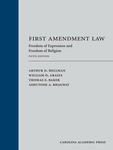
First Amendment Law: Freedom of Expression and Freedom of Religion
Thomas E. Baker
This is a casebook for First Amendment courses in law schools in the United States. It covers all the major topics under the First Amendment, including freedom of speech, freedom of association, freedom of the press, and the Religion Clauses. Our casebook is designed to be approachable to a wide range of instructors and students. It emphasizes the actual language of important Supreme Court decisions in this area and presents opinions with relatively light editing. The book also avoids long, discursive note materials that, in the authors' view, tend to distract or overwhelm most students. Finally, this casebook relies heavily on problems as a tool that instructors can employ to advance and confirm students' understanding of the covered topics.
-

Comentario al Artículo 7 de la Ley de Arbitraje Comercial Venezolana
Gilberto A. Guerrero-Rocca
El tribunal arbitral está facultado para decidir acerca de su propia competencia, incluso sobre las excepciones relativas a la existencia o a la validez del acuerdo de arbitraje. A ese efecto el acuerdo de arbitraje que forme parte de un contrato se considerará como un acuerdo independiente de las demás estipulaciones del mismo. La decisión del tribunal arbitral de que el contrato es nulo no conlleva la nulidad del acuerdo de arbitraje.
-
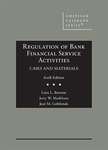
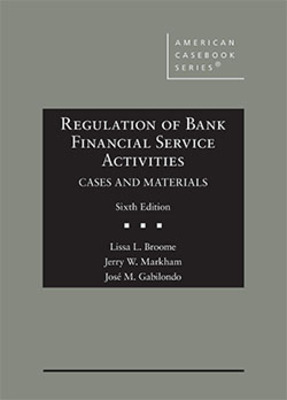
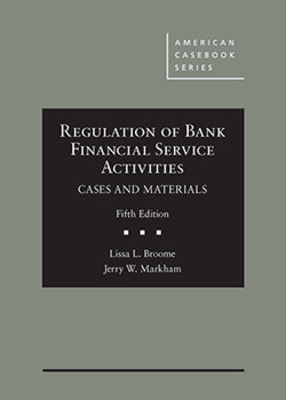
Regulation of Bank Financial Service Activities, Cases and Materials 6th Edition
Jerry W. Markham, Lissa L. Broome, and Jose M. Gabilondo
This edition incorporates developments in bank and financial services legislation and regulation that have occurred through June 2021, including the Trump administration’s regulatory initiatives in respect of the Dodd-Frank Act. The sixth edition organizes the chapters into three thematic Parts to help focus classroom discussion. Part One surveys the depository bank business model, the dual banking system, and its layered regulatory structure, including the role of financial holding companies, bank subsidiaries, and nonbank affiliates active across financial markets. The materials emphasize that though the majority of depository institutions are thrifts, credit unions, and community banks, consolidation and conglomeration have left the lion’s share of bank assets in the hands of a few large banking organizations that dominate national and global markets, presenting unique regulatory challenges.
Part Two focuses on prudential supervision of banks and their holding companies, which reflects the distinctive demands created by deposit-taking, credit creation, and liquidity intermediation. Post-crisis reforms have dramatically changed this aspect of regulation. The materials emphasize the different ways in which banks finance their activities, including by accepting insured deposits, borrowing at market rates from wholesale lenders, using government funds available only to banks, and raising equity capital from investors. The discussion makes clear how, in addition to meeting market capital requirements that apply to all businesses, banks contend with complex regulatory standards that encourage liquidity, limit leverage, and promote the ability to absorb unexpected losses.
Part Three surveys the range of specialized financial services performed by banks and their holding companies beyond their depository functions. The materials illustrate how banks underwrite debt and equity securities, manage investment portfolios, advise investors, make markets for financial products, act as both principal and agent in derivative transactions (including credit default swaps and interest rate derivatives such as options, futures, and forwards), and provide fiduciary services as trustees, including by managing retirement and collective investment funds, offering custody for financial assets, and competing with mutual funds. The book pays special attention to consumer lending -- through mortgage finance, educational debt, and credit card loans -- an area that has grown in importance due to the CFPB.
The authors have prepared a Word document with links to relevant statutes and regulations organized by subjects discussed in the casebook. This document is available in Word format so that adopters and others may add or subtract material to suit the coverage of their class. This alternative to a statutory and regulatory supplement reduces costs and weight in student’s backpack, but more importantly provides access to the latest versions of the relevant statutes and regulations. -
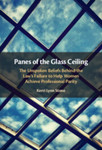
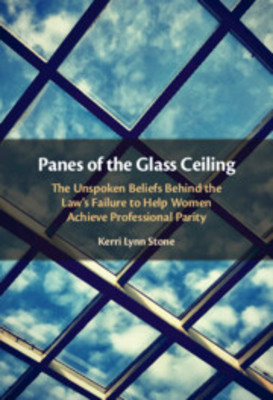
PANES OF THE GLASS CEILING: The Unspoken Beliefs Behind the Law's Failure to Help Women Achieve Professional Parity
Kerri Lynn Stone
More than fifty years of civil rights legislation and movements have not ended employment discrimination. This book reframes the discourse about the “glass ceiling” that women face with respect to workplace inequality. It explores the unspoken, societally held beliefs that underlie and engender workplace behaviour and failures of the law, policy, and human nature that contribute “panes” and (“pains”) to the “glass ceiling.” Each chapter identifies an “unspoken belief” and connects it with failures of law, policy, and human nature. It then describes the resulting harm and shows how this belief is not imagined or operating in a vacuum, but is pervasive throughout popular culture and society. By giving voice to previously unvoiced – even taboo – beliefs, we can better address and confront them and the problems they cause.
-
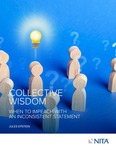
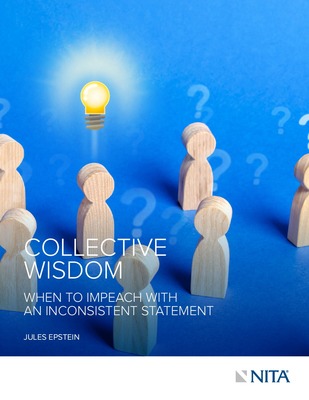
Contributor, in COLLECTIVE WISDOM: When to Impeach With an Inconsistent Statement
H. Scott Fingerhut
In that trial is competitive storyshowing in context, H.T. Smith, Director of FIU’s Trial Advocacy Program, rightly insists that the trial lawyer necessarily filters most every advocacy decision through the prism of “it depends,” including when on cross-examination to impeach a witness with a prior inconsistent statement. Whether the prior statement helps you, hurts you, or, albeit inconsistent, does neither, the when question takes these factors into consideration: • Significance―the contrast between the statements • Materiality―the importance of the impeachment to your case • Timing―when you learn of the impeachment opportunity Do the math.
-
Family Law in Latin America: Procedural and Substantive Issues. Derecho de Familia & Sucesiones en Latinoamérica. Jurisdicción y Derecho aplicable
Gilberto A. Guerrero-Rocca and Gilberto Guerrero-Quintero
-
The Law Reports of the Special Court for Sierra Leone: Volume IV: Prosecutor v. Sesay, Kallon and Gbao (The RUF Case) (Set of 3)
Charles C. Jalloh and Simon Meisenberg
The Special Court for Sierra Leone was established through signature of a bilateral treaty between the United Nations and the Government of Sierra Leone in early 2002, making it the third modern ad hoc international criminal tribunal. It has tried various persons, including former Liberian President Charles Ghankay Taylor, for serious violations of international humanitarian law committed during the latter half of the Sierra Leonean armed conflict. It completed its work in December 2013. A new Residual Special Court for Sierra Leone, based in Freetown and with offices in The Hague, has been created to carry out its essential “residual” functions.
This volume, which consists of three books and a CD-ROM and is edited by two legal experts on the Sierra Leone Court, completes the set of edited Law Reports started in 2012. Together, the Law Reports fill the gap of a single and authoritative reference source of the tribunal’s jurisprudence. The law reports are intended for national and international judges, lawyers, academics, students and other researchers as well as transitional justice practitioners in courts, tribunals and truth commissions, and anyone seeking an accurate record of the trials conducted by the Special Court for Sierra Leone. -
Corporations and Other Business Enterprises, Cases and Materials 5th Edition
Jerry W. Markham, Thomas Lee Hazen, and John Coyle
In addition to the law of corporations, the casebook explores the law of partnerships and the law of limited liability companies. It contains specialized treatment of fiduciary duties and closely-held corporations. It addresses the federal securities laws, Sarbanes-Oxley, SEC proxy rules, and insider trading. The casebook also discusses mergers and acquisitions, corporate finance, and the role of corporate lawyers in effectuating business transactions. Suitable for use in basic as well as advanced courses.
Printing is not supported at the primary Gallery Thumbnail page. Please first navigate to a specific Image before printing.